Crane Health Checkup
Crane Rail Survey for Accurate Alignment and Smooth Travel
Rail geometry, alignment and condition checking as per site requirement
Precision analysis of crane rail alignment and structure detecting derailment risks, structural stress points, and alignment deviations before they cause equipment damage or crane failure.
Expert Care and Support Solution for Your Industrial
Cranes and Material Handling Equipment
Precision analysis of crane rail alignment and structure to identify derailment risks, alignment deviations, and structural stress points. A crane rail survey ensures your crane runway delivers safe, smooth, and reliable bridge travel throughout the equipment service life.
Scope of Inspection
- Laser-based or manual rail alignment measurement
- Rail gauge, level, and straightness assessment
- Rail joint and fixing condition inspection
- Structural support and gantry beam condition review
- Crane wheel wear pattern analysis as rail condition indicator
- Rail fixing and clamp condition inspection
Deliverables
- Detailed rail survey report with measurement data
- Alignment deviation and defect identification
- Corrective action recommendations and execution plan
Get Your Custom AMC Plan Today
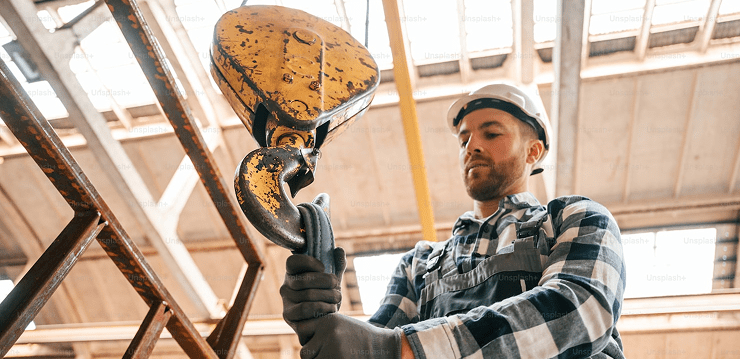
Outcome
- Prevention of rail-induced crane wheel and structural wear
- Elimination of derailment risk from alignment deviations
- Extended crane and rail service life through early correction
A Structured Approach to Condition Monitoring
Crane performance issues typically develop gradually due to wear, misalignment, load cycles, and environmental conditions..
Our structured evaluation process identifies risks early, understands real operating conditions, and delivers measurable improvements in reliability.
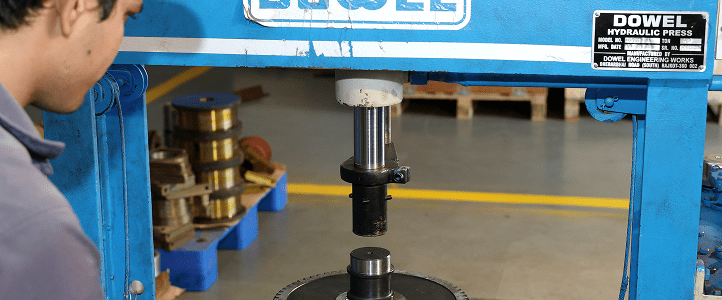
1. Safety Risk Assessment
Detection of Derailment Risks and Structural Stress Points
The survey begins with a safety assessment of the rail system to identify any existing conditions that create immediate derailment risk or structural overloading of the runway support structure.
Key Activities:
- Visual inspection of rail profile, joints, and fixings
- Identification of visible rail damage, wear, and deformation
- Structural inspection of runway beams and support connections
- Electrical and travel drive condition assessment
- Assessment of existing crane wheel wear pattern as rail condition indicator
This step creates a baseline risk profile of the crane system.
Flow to Next Step:
The safety risks and structural defects identified in this step define the priority areas for detailed alignment measurement in the next phase.
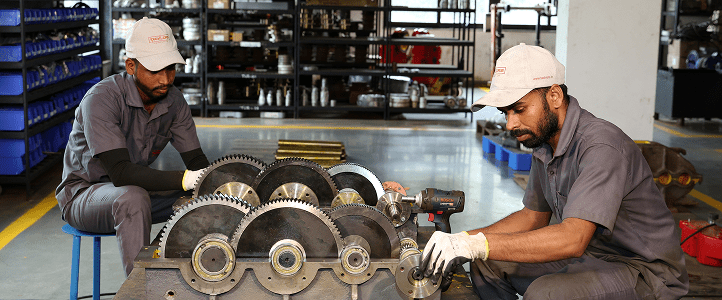
2. On-Site Evaluation
Laser-Based or Manual Rail Alignment Inspection On-Site
Precise rail alignment measurements are taken across the full runway length using laser measurement or precision manual methods to quantify gauge, level, and straightness deviations.
Key Activities:
- Full-length rail gauge measurement at defined intervals
- Rail level and straightness measurement along both runways
- Rail joint gap and height difference measurement
- Documentation of all measurements against allowable tolerances
This step connects the technical condition with actual usage patterns.
Flow to Next Step:
The safety risks and structural defects identified in this step define the priority areas for detailed alignment measurement in the next phase.
3. Cost & ROI Impact
Preventing Operational Inefficiencies and Costly Structural Damage
Rail alignment deviations translate directly into crane wheel wear, structural fatigue, and operational disruption. We quantify the business impact of identified defects and prioritise corrective actions.
Key Activities:
- Crane wheel wear rate analysis linked to rail condition
- Structural damage risk assessment from alignment deviations
- Maintenance and replacement cost estimation for defects
- Prioritisation of corrective actions by safety and cost impact
This step defines what needs to be done and why it matters to operations.
Flow to Next Step:
The safety risks and structural defects identified in this step define the priority areas for detailed alignment measurement in the next phase.
4. Delivery & Outcome
Alignment Correction Recommendations and Execution Plan
Survey findings are translated into a clear corrective action plan with recommended repair methods, execution sequence, and maintenance guidelines for ongoing rail condition management.
Key Activities:
- Detailed survey report with full measurement data
- Alignment correction recommendations with methods and tolerances
- Execution plan for rail alignment corrections
- Ongoing maintenance guidelines for rail condition management
This step creates a baseline risk profile of the crane system.
Result of the Approach
Action Plan and Long-Term Reliability Improvement
A comprehensive crane rail survey delivers a clear picture of runway condition and a practical corrective action plan restoring safe, smooth crane travel and extending equipment service life.
Key Activities:
- Elimination of derailment risk through identified alignment correction
- Reduced crane wheel and structural wear from alignment deviations
- Extended rail and crane service life through timely intervention
- Full documentary record of runway condition for maintenance planning
This step creates a baseline risk profile of the crane system.
Quick answers to questions that may interest you
Can't find what you're looking for? Talk to our expert for your requirements.
A Tacklers crane rail survey includes visual inspection of rail profile, joints, and fixings, full-length laser or manual alignment measurement of gauge, level and straightness, structural inspection of runway beams, and a detailed report with corrective action recommendations.
We recommend a crane rail survey every 2–3 years as a minimum, or whenever accelerated crane wheel wear, unusual travel noise, or wheel flange contact is observed which may indicate developing rail alignment issues.
Yes. Tacklers provides end-to-end rail survey and correction services from measurement survey through to alignment correction execution and final verification measurement delivered by our experienced site service team.
Need Reliable Lifting Solutions?
Talk to Us
Corporate Office & HO:
Plot No. 5,6,7 Devraj Industrial Park, Piplaj-Pirana Road, Ahmedabad – 382405, India
Regd. Office & Plant:
Plot No. 613, Phase IV, G.I.D.C, Vatva, Ahmedabad – 382445, India.
Bengaluru Plant:
Plot No. 508, Sompura Industrial Area, Dobaspet, Bengaluru – 562111. India.