
Crane Automation
Crane Automation Solutions for Controlled and Efficient Handling
Automation support as per process, movement and safety requirement
Integration of automation technologies to improve crane precision, reduce manual intervention, and enhance operational efficiency across industrial production environments.
Expert Care and Support Solution for Your Industrial
Cranes and Material Handling Equipment
Integration of automation for precision and efficiency. Crane automation reduces manual intervention, improves lifting accuracy, and increases throughput through PLC-based control, sensor integration, and automated positioning systems tailored to your production requirements.
Scope of Inspection
- PLC control system design and programming assessment
- Anti-sway and load positioning system evaluation
- Automated travel and positioning sensor integration
- Safety interlock and collision avoidance system design
- SCADA and production system integration assessment
- Operator interface and remote monitoring system review
Deliverables
- Automation feasibility and scope assessment report
- PLC programme and system architecture documentation
- Post-commissioning performance verification and operator training
Get Your Custom AMC Plan Today

Outcome
- Improved crane precision and load positioning accuracy
- Reduced manual intervention and operator fatigue
- Increased throughput with automated handling cycles
A Structured Approach to Crane Automation
Performance and upgrade challenges typically develop through changing production demands, ageing systems, and evolving safety standards.
Our structured approach identifies the right solution, assesses feasibility, quantifies ROI, and delivers measurable improvements in crane performance and reliability.
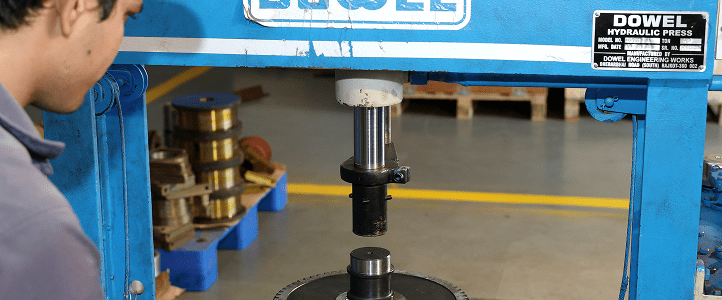
1. Safety Risk Assessment
Risk Reduction Through Minimized Manual Intervention
The automation process begins with a safety risk assessment to identify manual handling risks, operational inefficiencies, and safety gaps that automation can eliminate or reduce.
Key Activities:
- Identification of manual intervention risks in crane operation
- Safety gap analysis collision risk, load sway, and positioning errors
- Assessment of current control system compatibility with automation
- Documentation of automation safety requirements and interlocks
- Identification of production efficiency improvement opportunities
This step creates a baseline risk profile of the crane system.
Flow to Next Step:
The safety and efficiency baseline established here drives the on-site feasibility assessment for automation integration in the next step.
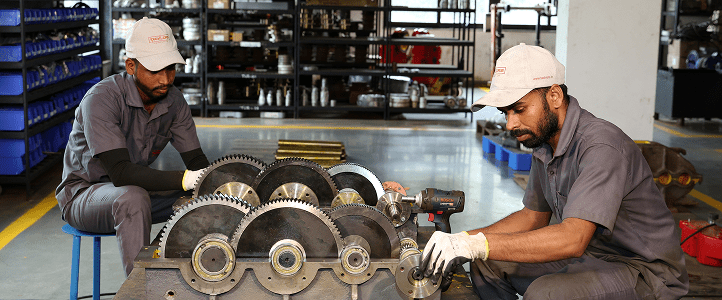
2. On-Site Evaluation
Site Analysis for Automation Integration Feasibility
The crane and production environment are assessed on-site to determine the technical feasibility of automation integration and define the system architecture.
Key Activities:
- On-site crane system and control architecture assessment
- Production workflow and cycle time analysis
- Sensor placement and positioning system feasibility assessment
- PLC and communication system compatibility evaluation
This step connects the technical condition with actual usage patterns.
Flow to Next Step:
The feasibility findings and system design define the investment and business case for crane automation in the next step.
3. Cost & ROI Impact
Improves Productivity and Reduces Human Error
Crane automation investment is evaluated in terms of productivity improvement, error reduction, and safety enhancement providing a clear business case for the automation programme.
Key Activities:
- Cycle time improvement quantification from automated operation
- Human error and incident risk reduction assessment
- Labour cost and operator utilisation improvement analysis
- Return on investment timeline and productivity benefit quantification
This step defines what needs to be done and why it matters to operations.
Flow to Next Step:
The approved automation scope and business case drive deployment of PLC systems, sensors, and controls in the final step.
4. Delivery & Outcome
Deployment of PLC Systems, Sensors, and Automated Controls
Automation systems are installed, programmed, commissioned, and tested with operator training before handover ensuring reliable automated operation from day one.
Key Activities:
- PLC system installation and programme commissioning
- Sensor and positioning system installation and calibration
- Safety interlock and collision avoidance system testing
- Operator training and post-commissioning performance verification
This step creates a baseline risk profile of the crane system.
Result of the Approach
Action Plan and Long-Term Reliability Improvement
Crane automation delivers measurable improvements in precision, safety, and throughput reducing manual intervention and improving operational efficiency.
Key Activities:
- Improved load positioning accuracy and reduced cycle time
- Reduced manual intervention and operator fatigue
- Enhanced safety through anti-collision and automated interlocks
- Increased production throughput with consistent automated performance
This step creates a baseline risk profile of the crane system.
Quick answers to questions that may interest you
Can't find what you're looking for? Talk to our expert for your requirements.
Tacklers crane automation ranges from semi-automated features (anti-sway, positioning assistance, soft limits) to fully automated handling cycles with PLC control, SCADA integration, & remote monitoring depending on your crane type & production requirements.
Yes. Tacklers automation systems are designed for retrofit to existing cranes of all types and ages. Our engineers will assess your current control system and define the most practical integration approach.
Tacklers provides commissioning documentation, PLC programme backup, and operator training as standard. Post-commissioning AMC coverage for automated crane systems is also available.
Need Reliable Lifting Solutions?
Talk to Us
Email:
Corporate Office & HO:
Plot No. 5,6,7 Devraj Industrial Park, Piplaj-Pirana Road, Ahmedabad – 382405, India
Regd. Office & Plant:
Plot No. 613, Phase IV, G.I.D.C, Vatva, Ahmedabad – 382445, India.
Bengaluru Plant:
Plot No. 508, Sompura Industrial Area, Dobaspet, Bengaluru – 562111. India.